
Can Pedestrians Be Partially at Fault in an Accident?
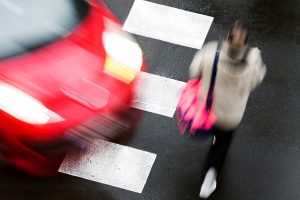 When a pedestrian is hit by a car, there’s a common assumption that the driver is automatically at fault. Pedestrians are far more vulnerable in this situation than drivers, and drivers have an obligation to protect other road users from their vehicles. In many pedestrian accident cases, the driver is the sole at-fault party. However, there are situations in which a pedestrian may be partially to blame.
If you’ve been injured in a pedestrian accident, it’s important to know what your actions may mean for your claim and if you’re entitled to compensation. Call Santoro & Gray today to explore your legal options.
Comparative negligence in Massachusetts
Massachusetts is a modified comparative negligence state. This is important to know when we’re talking about accidents where multiple parties are at fault. Basically, this law allows victims who are partially to blame for an accident to recover compensation in court, as long as they are no more than 50% at fault for their injuries. Once their share of fault exceeds 50%, they are barred from recovering compensation in court. As long as they are at or below that 50% mark, their compensation is simply reduced proportionately to their share of liability.
Scenarios where pedestrians may be partially at fault
If you’re wondering how pedestrians may be to blame after an accident, there are several examples we can look at. Pedestrians may be assigned partial liability in cases like these:
- Jaywalking: Jaywalking isn’t against the law everywhere, and even where it is, it’s not necessarily enough to make pedestrians liable for an accident. However, crossing outside a crosswalk is largely viewed as unsafe behavior, and it may result in less compensation for a pedestrian.
- Crossing against a signal: When a pedestrian crosses the road on a ‘don’t walk’ signal, they are violating clear and direct traffic control signals. This does not automatically make them mostly responsible for the accident, but it can significantly increase their share of fault depending on the circumstances. Drivers still have a legal obligation to watch for pedestrians and take reasonable steps to avoid hitting them.
- Walking while distracted: Distracted pedestrians put themselves and others in danger. When a pedestrian is engrossed in their phone, music, book, or other distraction, they may not notice when they step into the road or when a car is about to hit them. However, as previously discussed, this doesn’t excuse negligent driving. A negligent driver isn’t suddenly free and clear from the consequences of their actions simply because the pedestrian they hit was distracted.
- Stepping into the roadway unexpectedly: This is easily one of the most dangerous examples on this list. A pedestrian who steps out from behind a car, building, or snowbank into the road can completely blindside a driver and leave them unable to stop in time. In these situations, pedestrians are not acting predictably—and so they may be held partially liable for any accident that follows.
- Impaired walking: A pedestrian under the influence of drugs or alcohol can take unnecessary risks that make it hard for drivers to predict what they’ll do next. They may misjudge traffic, swerve while walking, or unintentionally step in front of a vehicle. The fact that this is more likely to happen at night further increases the danger.
Even though pedestrians may be partially at fault in situations like those listed here, drivers are still obligated to drive in a safe, predictable, and legal manner. This means that even when a pedestrian violates the law, drivers still must prevent an accident whenever reasonably possible.
How fault is determined
Assigning fault in a pedestrian accident involves a thorough analysis of all available evidence. The goal of the investigators and attorneys involved in the process is to understand what happened in the moments leading up to an accident—and what mistakes were made. Some valuable forms of evidence in these cases include:
- Surveillance and traffic camera footage
- Vehicle damage and skid mark analysis
- Dashcam footage, when available
- Police accident reports
- Eyewitness statements
- Cell phone and text message records (may indicate that either the driver or pedestrian was distracted at the time of the accident)
- Medical records
It’s fairly common for the evidence to reveal that both parties made mistakes leading to the accident.
Once the evidence has been evaluated, your attorney can evaluate driver negligence. Even when a pedestrian is negligent and crosses outside of a crosswalk, crosses against a light, or otherwise acts irresponsibly, that does not mean drivers can operate however they choose. Drivers may still be found to have the majority of fault if they were:
- Speeding
- Texting and driving
- Impaired by drugs or alcohol
- Failing to yield to someone crossing the street (even if they were crossing illegally)
- Running a red light or stop sign
- Driving recklessly
Drivers should anticipate that pedestrians will be present and may cross the road when they are in urban areas, especially if they are in downtown, college, or nightlife regions known for foot traffic. However, while drivers must exercise due care to avoid collisions, they will not automatically be at fault if a pedestrian suddenly or illegally enters the roadway without warning.
How insurance companies may assign fault
It’s important to recognize that the way an insurance company initially tries to assign fault may not actually be a fair breakdown of liability. Remember, insurance companies are out for their own best interests. If their driver strikes you and causes you serious harm, they have a vested interest in convincing you that you are actually at fault. They may use minor mistakes on your part to inflate your share of liability, downplay a driver’s unsafe actions, or intentionally misinterpret the evidence in their favor. That’s why it’s important to have a pedestrian accident attorney who can advocate for you and fight for the compensation you deserve.
Plan your next steps with the team at Santoro & Gray
If you’ve been injured in a Boston pedestrian accident, it’s time to talk to an attorney who can fight for you. Our team has helped pedestrians throughout Massachusetts hold negligent drivers accountable. Contact us online or call us today to schedule a consultation.

Tori Santoro and Jessica Gray of Santoro & Gray assist clients in Boston and throughout Massachusetts with personal injury matters. If you have suffered injuries due to a car accident, dangerous product, or sexual assault, please contact their dedicated legal team now.