
Underinsured Motorist Coverage: The Protection You Control After an Uber, Lyft, or Serious Crash
 When you climb into an Uber or Lyft, you probably assume that if something goes wrong, there is plenty of insurance to cover it. Rideshare companies advertise million-dollar policies, after all. The reality is more complicated. Rideshare coverage is layered, full of conditions, and often leaves injured people relying on other policies to make themselves whole.
That is why we want to talk about a protection most people overlook: your own underinsured motorist coverage. We are Boston personal injury lawyers, and time and again we see the same thing. The coverage that ends up mattering most after a serious crash is not the at-fault driver’s policy or even the rideshare company’s. It is the coverage you chose to carry yourself.
What underinsured motorist coverage actually is
Two coverages often get grouped together, but they solve different problems.
Uninsured motorist (UM)(opens in new tab) coverage protects you when the at-fault driver has no insurance at all, including in a hit-and-run where the driver cannot be identified. In Massachusetts, UM coverage is mandatory, and every auto policy must include at least $25,000 per person and $50,000 per accident.
Underinsured motorist (UIM) coverage is different. It applies when the at-fault driver does have insurance, but not nearly enough to cover what your injuries are actually worth. Your own policy steps in to cover the shortfall. Here is the part that surprises people: in Massachusetts, UIM coverage is optional. It is not included automatically. You have to choose to add it, and far too many drivers never do.
How UIM works in Massachusetts
UIM coverage only helps when your UIM limit is higher than the at-fault driver’s bodily injury limit. The amount available to you is generally your UIM limit minus the at-fault driver’s applicable bodily injury limit.
A quick example shows why this matters. Say another driver causes a crash, you suffer $100,000 in injuries, and that driver carries only the state minimum of $25,000 in bodily injury coverage. Without UIM, your recovery may stop at that $25,000, no matter how badly you were hurt. But if you carried $100,000 in UIM coverage, you could collect the $25,000 from the at-fault driver and then up to $75,000 more from your own policy. That is the difference between being made whole and being left with the bills.
A few things are worth knowing about these claims. In Massachusetts, UM and UIM claims are treated as contract claims, which are generally subject to a six-year limitations period running from the insurer’s breach, rather than the three years that apply to most injury lawsuits. They also tend to be resolved through arbitration rather than in court. And because the claim is against your own insurer, the friendly company you have paid for years suddenly has a financial interest in paying you as little as possible. Having a lawyer in your corner levels that playing field.
Why rideshare crashes make UIM even more important
Rideshare insurance is a maze, and which policy applies depends on exactly what the driver was doing the moment of the crash.
When the app is off, only the driver’s personal auto policy applies, and many drivers carry just the state minimum. When the app is on but the driver has not yet accepted a ride, the rideshare company provides only limited coverage, often around $50,000 per person and $100,000 per accident, and personal policies frequently exclude rideshare use altogether. Once the driver is on the way to a pickup or has a passenger aboard, a much larger liability policy of at least $1 million applies.
Even that million-dollar policy has limits. It is liability coverage, meant to pay when the rideshare driver is at fault. If a different driver causes the crash and that driver is underinsured, your additional insurance recovery may depend on underinsured motorist coverage, and whether the rideshare company carries it varies from state to state. On top of that, these cases often bog down in disputes over which app period was active, who was at fault, and which policy pays first.
You cannot control any of that. What you can control is your own coverage. UIM follows you, not just your car. It can protect you whether you are driving your own vehicle, riding in a friend’s car, sitting in the back of an Uber, walking through a crosswalk, or riding a bike. It is the one piece of this puzzle that is entirely in your hands.
How much UIM should you carry?
For most drivers, underinsured motorist coverage is surprisingly affordable, especially compared to what it can pay out. We generally encourage people to carry as much as they reasonably can, ideally matching their bodily injury limits and going well above the state minimums. A single serious car crash can produce hundreds of thousands of dollars in medical bills and lost income, and minimum limits rarely come close.
The best time to check is right now, before anything happens. Pull out your auto policy, or call your agent, and ask two simple questions: Do I have underinsured motorist coverage, and how much? If the answer is none, or only the minimum, that is worth changing today. It protects not only you but your household members and can also protect passengers, depending on the applicable coverage.
Hurt in a crash and worried about coverage? Talk to us
If you have already been injured, you do not have to untangle all of this alone. After a serious crash, full recovery often means layering several sources of coverage together, and your own underinsured motorist policy is frequently one of the most important. Finding every available dollar is exactly the work we do.
At Santoro & Gray, we listen first, then we fight. We handle car accident and rideshare cases on a contingency basis, which means you pay nothing unless we win. Call us or reach out online for a free consultation, and let us help you understand every protection available to you.
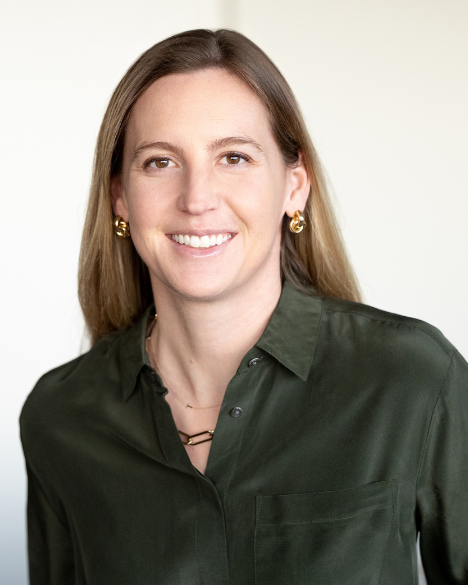
Victoria Santoro is a skilled trial attorney and the co-founder of Santoro & Gray. She handles a variety of personal injury cases, including rideshare litigation, car crashes, premises liability and product liability matters. Contact the firm’s Boston office today.